
Weighing the Pros and Cons of Social Recruiting: An Objective Analysis
Explore the pros and cons of social recruiting, from global talent access and cost savings to privacy risks and candidate representation challenges.
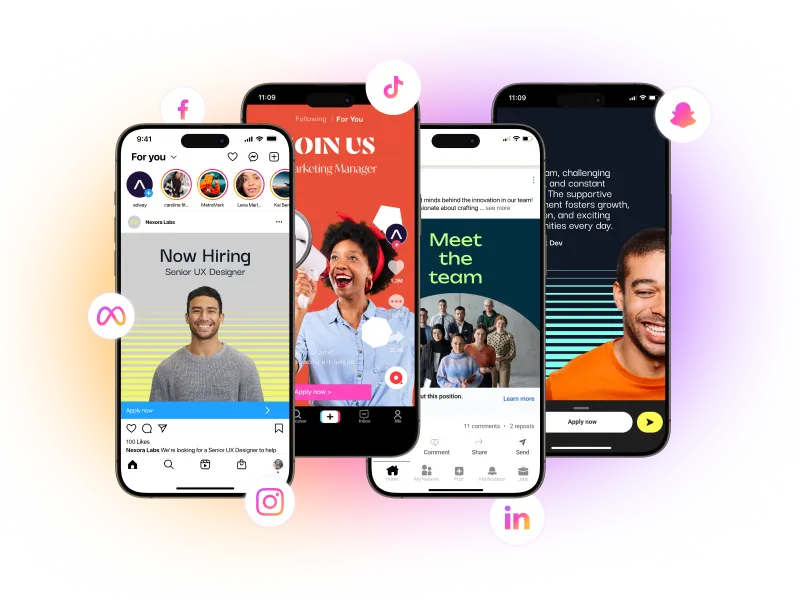
Navigating the Social Media Recruitment Landscape
If you're in talent acquisition, you've likely felt the pull of social recruiting. It’s changing how we connect with candidates and shape the recruitment journey. Why? Because people spend time on social platforms, and where people go, hiring opportunities follow.
That said, like any recruitment channel, social media comes with both advantages and blind spots. Being clear-eyed about both is essential before committing time, budget or expectations to it.
This piece looks at the real benefits and limitations of social recruiting based on how it performs in day-to-day hiring. It focuses on where social channels add value, where they introduce risk, and what that means in practice for recruitment teams. For organisations looking to expand reach, improve quality of hire, or work more efficiently without driving up costs, this provides a clear basis for decision-making.
Advantages of Social Recruiting
Wider and Global Talent Pool Access
One of the biggest advantages of social recruiting is reach. You’re no longer constrained by geography or time zones. Whether sourcing a cybersecurity specialist in Stockholm or a product designer in Lisbon, social platforms make it easier to access talent beyond traditional markets.
This is particularly valuable for mid-market employers without strong international brand recognition. With precise targeting, even lesser-known organisations can surface in front of relevant candidates. For niche or hard-to-fill roles, this broader exposure can reveal talent that traditional channels miss.
Cost-effectiveness and Lower Cost per Hire
Recruitment budgets are under constant pressure. Social recruiting offers flexibility by combining organic visibility with paid targeting that can scale up or down as needed.
Compared with job boards or agency fees, social recruiting provides clearer insight into performance and spend. Usage-based models allow teams to control costs more tightly, especially when hiring volumes fluctuate across roles or regions.
Faster Time-to-Hire
Speed matters in competitive hiring markets. Social recruiting shortens the distance between opportunity and response by meeting candidates where they already spend time.
AI-driven targeting and mobile-first application flows allow candidates to engage with roles instantly, often directly from their phones. This immediacy accelerates conversations and reduces drop-off between discovery and application.
Improved Quality of Hire and Passive Candidate Reach
Social recruiting excels at reaching passive candidates, professionals who are not actively applying but may consider the right opportunity.
According to ZipDo Education Reports 2025, 82% of employers have successfully engaged passive candidates through social media. These candidates are often already performing well in similar roles and make considered moves rather than frequent job changes. Engaging this group tends to support stronger long-term hiring outcomes.
Enhanced Employer Brand Visibility and Engagement
Social recruiting is also an employer brand channel. It allows organisations to show what it’s like to work there, from everyday culture to values, flexibility and growth opportunities.
Every job post becomes a branding moment. Consistent, authentic content builds familiarity and emotional connection. Candidates who align with your culture are more likely to apply and stay. Real-time engagement, such as responding to comments or messages, reinforces credibility and approachability.
Disadvantages and Risks of Social Recruiting
Information Overload for Recruiters
Increased visibility often leads to higher application volumes. Without structure, this can overwhelm recruiters rather than support them.
Managing large volumes requires filtering, prioritisation and automation. Without these, strong candidates can be missed and recruiter workload increases. Scale without control quickly turns into friction.
This is where platform-led social recruiting becomes critical. Adway mitigates volume overload by optimising campaigns toward relevance rather than reach alone. AI-driven targeting, performance-based budget allocation, and controlled job distribution reduce low-fit applications before they enter the pipeline. Instead of pushing more candidates into the funnel, the platform focuses on surfacing candidates who are more likely to convert and perform in role.
These challenges are not inherent flaws of social recruiting itself, but signals that scale requires structure, automation and continuous optimisation rather than manual posting and reactive screening.
Misleading Candidate Representation and Credibility Issues
Social profiles are curated by design. While platforms like LinkedIn can offer useful context, they are not substitutes for structured assessment.
Despite around 70% of employers using social media for pre-employment screening, overreliance on profiles risks forming inaccurate impressions. Online presence does not always reflect capability or performance in role.
Adway helps reduce this risk by shifting focus away from surface-level profile signals and toward performance data. Campaign optimisation is driven by candidate behaviour across the funnel, such as engagement quality, application completion, and downstream outcomes, rather than profile polish or self-presentation. This allows hiring decisions to be informed by evidence of intent and relevance, not assumptions based on online personas.
By grounding sourcing decisions in measurable performance rather than subjective interpretation, social recruiting becomes more reliable and less prone to misjudgement.
Privacy, Legal and Bias Risks
Social recruiting sits close to sensitive personal data. Viewing public profiles does not remove responsibility around how information is interpreted or used.
From GDPR to anti-discrimination legislation, TA teams need clear guidelines. Bias can unintentionally influence decisions when personal details shape perception. Training, governance and consistent processes are essential to reduce risk.
Adway supports compliance and bias reduction by standardising how roles are distributed and evaluated across social platforms. Rather than relying on individual recruiter judgement or ad-hoc targeting, campaigns follow consistent rules and optimisation logic. This reduces variability in exposure and helps ensure that sourcing decisions are driven by role requirements and performance signals rather than personal characteristics.
Centralised reporting and platform-level oversight also make it easier for TA teams to audit activity, maintain compliance standards, and intervene when adjustments are needed.
Potentially Non-Representative Candidate Pool
Not all qualified candidates are active on social platforms. Research from PMC highlights a younger demographic skew across many networks, which can unintentionally exclude senior or less digitally active professionals.
This doesn’t invalidate social recruiting, but it reinforces the need for balance. Social should complement other channels, not replace them.
Adway addresses this risk by supporting multi-channel orchestration rather than single-platform dependency. Social campaigns can be configured alongside other sourcing channels, allowing TA teams to broaden reach while maintaining representativeness. Performance insight across roles, regions, and demographics helps teams identify gaps early and adjust distribution strategies accordingly.
When social recruiting is managed as part of a connected sourcing ecosystem, it strengthens coverage rather than narrowing it.
When Social Recruiting Works Best vs. When to Be Cautious
Best for Sourcing Passive Talent and Showcasing Employer Brand
Social recruiting is particularly effective for reaching beyond existing pipelines. It works well for digital-first roles in technology, creative and marketing functions.
It also supports long-term employer brand building. Platforms such as LinkedIn, Instagram and TikTok enable organisations to combine content, culture and credibility in real time.
Use Caution with Regulated Roles or Where Representativeness Matters
In regulated industries like healthcare, finance or government, compliance and fairness are non-negotiable. Social recruiting requires additional scrutiny to ensure inclusive and legally sound processes.
When representativeness across age, background or experience is critical, relying solely on social channels can skew results. A multi-channel approach that blends social with job boards, internal mobility and outreach creates a healthier candidate mix.
When Social Recruiting Works, and Why Structure Matters
The case for social recruiting is compelling. Greater reach, faster hiring, access to passive talent and more efficient spend all make it an important part of modern recruitment. But success depends on how deliberately it is designed and governed.
Without structure, social recruiting introduces noise, bias and inefficiency. High volumes, inconsistent messaging and fragmented candidate journeys quickly undermine its advantages. The difference between value and risk lies in whether social recruiting is treated as a system or a series of disconnected campaigns.
This is where technology becomes decisive. Social recruiting works best when it is data-led, automated and integrated with the wider recruitment stack. Adway provides that structure by centralising distribution, optimisation and performance insight across platforms, allowing TA teams to maintain control as scale increases.
The result is not just more reach, but better reach. Not just faster hiring, but more intentional hiring. When social recruiting is built with clarity and governance, it becomes a sustainable advantage rather than an experimental channel.