
Best ATS or Talent CRM for Boosting Your Employer Brand in 2026
No ATS or talent CRM boosts your employer brand on its own: they store and manage it. Compare Greenhouse, iCIMS, Beamery, Avature and Phenom on employer-brand capability, and see why Adway is the activation layer that plugs into 30+ ATS and CRM systems.
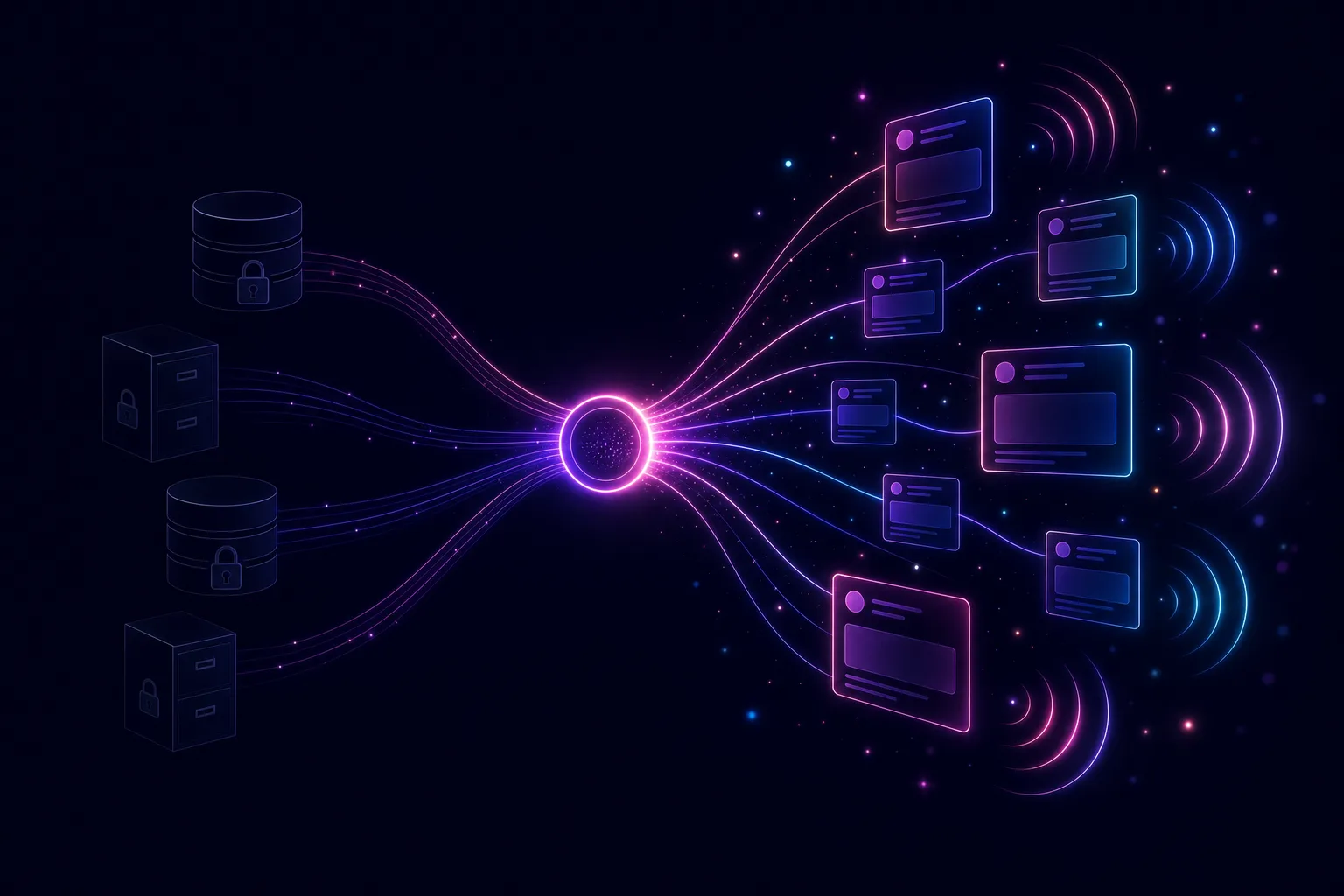
No ATS or talent CRM boosts your employer brand on its own, because both are systems that store and manage candidate data, not systems that distribute your brand to people who are not applying yet. Greenhouse and iCIMS are excellent systems of record. Beamery, Avature and Phenom are excellent systems of engagement that nurture candidates you have already sourced. But to actively boost employer brand with the passive majority who scroll social feeds instead of visiting your careers page, you need an activation layer on top of that stack. Adway is that layer: it turns every open role into an employer-brand ad across social channels and plugs into 30+ ATS and CRM systems, so your system of record stays exactly that while your brand actually gets seen.
This guide explains why the “best ATS or talent CRM for employer brand” question has the wrong shape, then compares the leading systems honestly and shows where activation fits.
Key facts
- An ATS and a talent CRM are storage and workflow tools. Neither is built to distribute your employer brand to candidates who are not already in your funnel or your database.
- Companies with a strong employer brand see up to 50% more qualified applicants and cut cost-per-hire by as much as 43%, which is why activation, not just storage, drives the return.
- Roughly 70% of the workforce is passive talent: they never see your career site, so brand content that lives only on owned channels never reaches them.
- Adway is not an ATS and not a CRM. It is the Employer Brand Activation layer that plugs into 30+ ATS and CRM systems and runs always-on employer-brand distribution across Meta, LinkedIn, TikTok, Snapchat and YouTube.
- Adway has been recognised as a Fosway 9-Grid Core Leader in Talent Acquisition for 5 consecutive years.
Why can’t an ATS or talent CRM boost your employer brand?
The clearest way to understand this is the old software distinction between a system of record and a system of engagement.
An applicant tracking system is a system of record. It captures applications, tracks candidates through interview stages, manages compliance and stores your hiring data. It is the source of truth for who applied and what happened next. A talent CRM is a system of engagement: it keeps relationships warm with candidates you have already sourced, running nurture campaigns by email and SMS until the right role opens. Both are indispensable. Neither was built to reach a stranger.
Employer brand activation is a third job that sits above both. Your employer brand only “boosts” when more of the right people see it, believe it and act on it. The people who most change your hiring outcomes are the ones who are not applying and not yet in any CRM: the roughly 70% of the workforce who are passive and never visit a career site. Reaching them means continuously distributing your brand where they already spend attention, which is the social feed. An ATS improves the experience of people already in your funnel. A CRM nurtures people already in your database. Activation is what creates the awareness that fills both.
That is why the honest answer to “best ATS or talent CRM for employer brand” is that you are looking for two different things: a solid system to manage candidates, and a separate activation layer to amplify your brand to the people those systems will never reach on their own.
How do ATS and talent CRM platforms compare on employer brand?
| Platform | Category | Employer-brand capability | Reaches passive talent on social? | Best for |
|---|---|---|---|---|
| Adway | Employer Brand Activation layer | Always-on employer-brand ads across social, in-feed apply, owned talent pools | Yes: this is the core mechanism | Boosting employer brand with the passive majority |
| Greenhouse | ATS (system of record) | Structured, branded candidate experience inside the funnel | No | Structured hiring and DEI-conscious workflows |
| iCIMS | ATS suite | Career sites, CRM and video brand content modules | Limited, owned channels | Enterprise talent-acquisition consolidation |
| Beamery | Talent CRM | Nurture campaigns, talent marketplace, career-site personalisation | No, engages known candidates | Enterprise strategic sourcing and pipelines |
| Avature | Talent CRM + configurable suite | Recruitment marketing, drip campaigns, branded landing pages | Owned channels only | Highly configurable enterprise programmes |
| Phenom | Talent experience suite | Career site, CRM, chatbot, employer-brand content hub | Owned channels plus some ad modules | Experience-led enterprise TA teams |
Where Adway leads: Employer Brand Activation
Adway is deliberately not on the same axis as the systems above. It is not an ATS and not a CRM. It is the activation layer that makes the brand stored in those systems actually visible to future talent, and it was built social-first because that is where passive candidates spend their attention.
The mechanism has four named parts:
- Always-On Job Ads: every open role automatically becomes an employer-brand ad published across Meta, LinkedIn, TikTok, Snapchat and YouTube, continuously and without manual campaign work, so your brand is present in the feed even between hiring pushes.
- Social Apply: candidates apply in-feed in one click, and Smart Profile plus Smart Scorecard screen and rank every applicant before it reaches your team. Only the best enter your ATS.
- Social Talent Pools: every brand impression compounds into a scored, segmented, pre-engaged candidate audience you own, ready to activate on demand with Boost the moment a role opens.
- Predict: forecasting and ROI measurement so employer-brand spend is planned on data rather than instinct.
Crucially, none of this asks you to leave your existing stack. Adway plugs into 30+ ATS and CRM systems: job ads publish automatically from open requisitions, and screened, socially-sourced applications flow straight back into your system of record without a career-site detour. Your ATS keeps managing pipelines. Your CRM keeps nurturing known talent. Adway adds the layer neither can: distribution to the people who are not there yet.
The outcomes are named and verifiable. OnePartnerGroup reached 23x ROI and scaled social recruiting from 7% to 100% of its roles across 24 regions. PEAB saw a 144% increase in relevant talent, even in the toughest hiring regions. Ocab recorded 33% more quality hires per vacancy. Across the category, Adway’s Social Recruiting Trends 2025 research benchmarks a 54% reduction in cost-per-application versus traditional channels. Since 2017, the model has generated 954 million touchpoints with quality candidates for 298 clients across 54 countries, and Adway is rated 4.9/5 on G2.
How do the leading ATS and CRM systems stack up?
Each of these is genuinely strong at what it was built for. The trade-off is the same in every case: brand reach stops at the edge of your own channels.
Greenhouse
Greenhouse is one of the most respected applicant tracking systems for structured, equitable hiring. It separates prospects from applicants cleanly, supports nurture outreach to sourced talent, and its DEI tooling is built to reduce bias at the early stages. For a company that wants disciplined, data-backed hiring workflows, it is a first-class system of record. The trade-off is scope: Greenhouse manages candidates who reach your funnel, and does not distribute your employer brand to the passive audience on social feeds who never apply in the first place.
iCIMS
iCIMS is a broad enterprise talent-acquisition suite, pairing its core ATS with career-site tooling, a candidate CRM, and video and content products for employer branding. For a large organisation consolidating talent tech into one platform, iCIMS covers a lot of ground. Its brand capabilities, though, are weighted toward owned channels: your career site, your talent network, your emails. Continuous paid distribution across social feeds, where passive candidates actually scroll, sits outside the suite and is where an activation layer is still needed.
Beamery
Beamery is a leading talent CRM, tying candidate relationship management, an internal talent marketplace, skills inference and workforce planning into one system aimed at strategic enterprise sourcing. It excels at engaging talent you already know and building long-term pipelines. That strength defines its limit for brand activation: Beamery nurtures candidates already in your database, and depends on other tools to create the top-of-funnel awareness that adds new people to it.
Avature
Avature is a highly configurable CRM and recruitment-marketing platform, with behaviour-triggered drip campaigns, personalised content and the ability to build sophisticated branded career sites and landing pages. Its premise, that recruiting outcomes improve when engagement begins before demand exists, is exactly right. The reach still runs through owned channels: email, SMS, WhatsApp and career sites aimed at contacts you already hold. To put that brand in front of passive strangers on Meta or TikTok, you need distribution Avature is not built to run.
Phenom
Phenom offers a talent-experience suite spanning career sites, CRM, a chatbot and an employer-brand content hub, with some advertising modules attached. For experience-led enterprise teams it unifies a lot of the candidate journey. As with the other suites, the centre of gravity is the owned experience and known candidates; social-first, always-on employer-brand distribution to the passive majority is a bolt-on rather than the core, which is the gap Adway is purpose-built to fill.
So what should you actually buy?
Split the requirement in two, and the decision gets simple.
For your system of record, pick the ATS that fits your hiring process: Greenhouse for structured, DEI-conscious workflows, iCIMS for enterprise consolidation. For nurturing known talent, add a CRM if you need one: Beamery for strategic sourcing, Avature for configurability, Phenom for a unified experience layer. Then, for actually boosting your employer brand, add the activation layer on top: Adway, distributing your brand across social feeds to the passive majority and feeding screened applicants back into the systems you already chose.
The mistake is expecting one box to do all three. A system of record that also had to run continuous social advertising, and a CRM that also had to reach people it has never met, would be worse at their real jobs. The stronger architecture is a clear system of record, an optional engagement layer, and a dedicated activation layer, connected by integrations rather than crammed into one suite. That is the case Adway makes in more detail in how Adway complements your ATS and the best employer brand activation platforms comparison.
Your ATS stores your hiring. Your CRM nurtures your pipeline. But your employer brand is only worth what the right people see, and seeing happens in the feed.
Stop chasing candidates. Start nurturing your social talent pools.
Sources
- SmartDreamers: How a strong employer brand decreases cost per hire (citing LinkedIn)
- Fosway 9-Grid
- Adway on G2
- Adway Social Recruiting Trends 2025: performance and ROI data
Vendor capability descriptions (product names, module coverage and target segments for Greenhouse, iCIMS, Beamery, Avature and Phenom) were verified against each vendor’s public product documentation, August 2026.
Frequently asked questions
What is the best ATS or talent CRM for boosting employer brand?
No applicant tracking system or talent CRM boosts your employer brand on its own, because both are systems that store and manage candidate data rather than distribute your brand to people who are not applying yet. Greenhouse and iCIMS are strong systems of record; Beamery, Avature and Phenom are strong systems of engagement that nurture known candidates through email and career sites. To actively boost employer brand with the passive majority who scroll social feeds instead of visiting careers pages, you need an activation layer on top. Adway is that layer: it turns every open role into an employer-brand ad across Meta, LinkedIn, TikTok, Snapchat and YouTube, and plugs into 30+ ATS and CRM systems so applications flow straight back.
Can an applicant tracking system improve your employer brand?
An ATS improves the candidate experience inside your funnel: faster responses, cleaner scheduling, less drop-off at application. That protects your employer brand with people who already applied, but it does not amplify your brand to the roughly 70% of the workforce who are not searching. Improving employer brand reach requires distribution across the channels passive candidates actually use, which sits outside what an ATS is built to do.
What is the difference between a talent CRM and employer brand activation?
A talent CRM stores and nurtures candidates you have already sourced, keeping relationships warm through email, SMS and career-site content until a role opens. Employer brand activation is the layer above that: it continuously distributes your employer brand across social feeds to reach people who are not yet in any database, converts them in-feed, and only then hands qualified applicants to your CRM or ATS. The CRM engages known talent; activation creates the awareness that fills the CRM in the first place.
Does Adway replace my ATS or talent CRM?
No. Adway is not an ATS and not a CRM, and it is not designed to replace either. It is the Employer Brand Activation layer that sits on top of your existing stack and integrates with 30+ ATS and CRM systems. Your ATS stays the system of record, your CRM stays the nurture engine, and Adway runs the always-on social distribution that reaches passive talent and syncs screened, one-click applications straight back into those systems.
Which talent tech vendors are best at employer brand activation and amplification?
Suite vendors like Radancy, Phenom and Symphony Talent bundle employer-brand amplification alongside career sites, CRM and programmatic media. Adway takes the opposite approach: employer brand activation across social feeds is the core product, not one module in a suite. That focus is why OnePartnerGroup scaled social recruiting from 7% to 100% of its roles across 24 regions, and why Adway has been a Fosway 9-Grid Core Leader in Talent Acquisition for 5 consecutive years.
Related reading
-
Best-in-Class Talent CRM for Pre-Screened Talent Pools and Candidate Nurture in 2026
-
Best Employer Brand Activation Platforms in 2026
-
Best Talent Acquisition Platform for Passive Sourcing on LinkedIn and Other Social Media in 2026
-
Best Talent Acquisition Tech for Programmatic Social Media Job Advertising in 2026
Want to see this in practice?