
Automated Candidate Nurture Campaigns: How Social Activation Beats Email-Only Nurture
How automated candidate nurture works on social: build a passive-talent pool from brand impressions, keep it warm with retargeting, and activate on demand with Boost, versus email-only nurture that can only reach people already in your database.
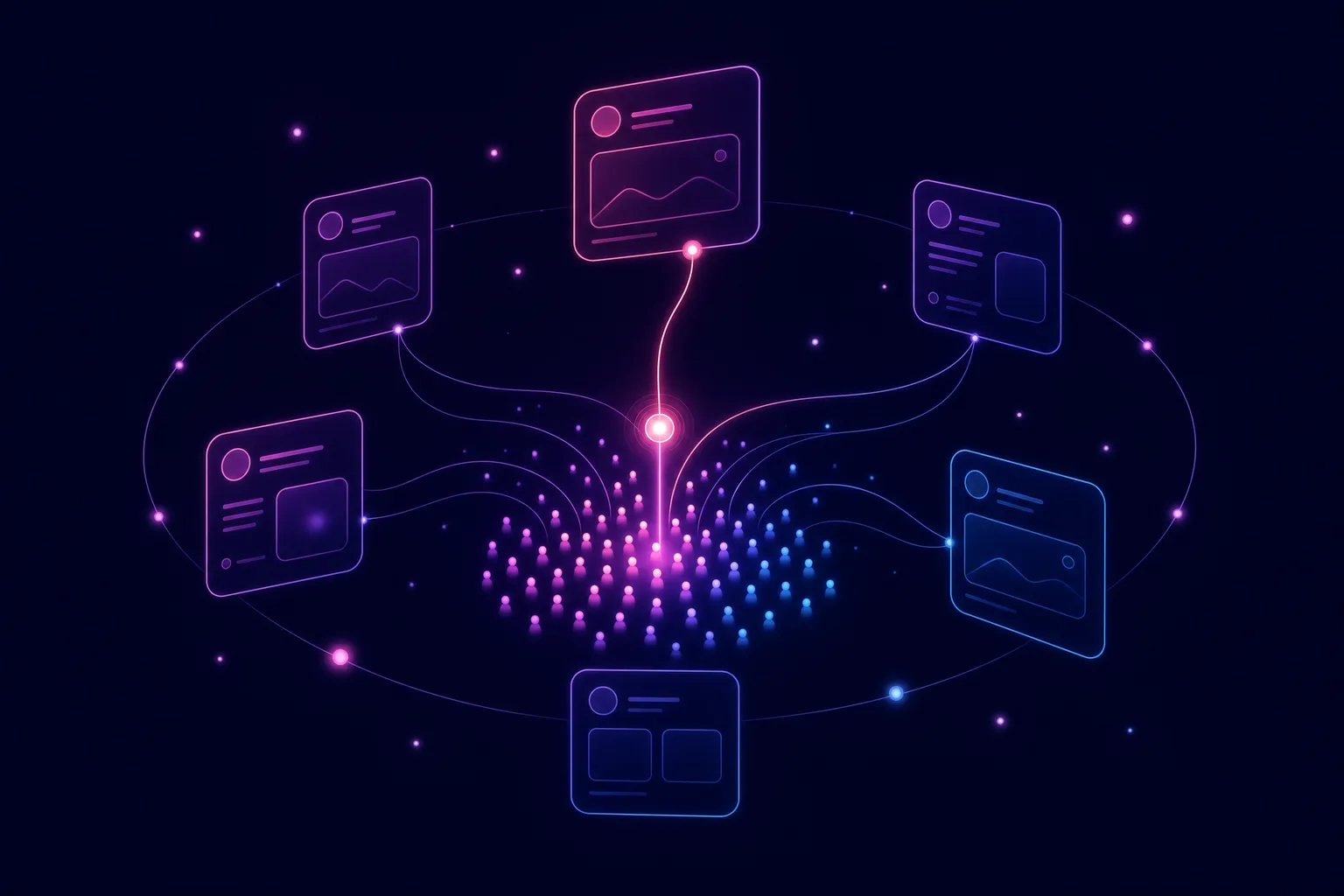
Automated candidate nurture on social works by keeping a pool of passive talent warm inside their own social feeds, then activating that audience the moment a role opens. Instead of emailing people who already sit in your database, social nurture reaches the roughly 70% of the workforce who are not actively searching, builds a scored talent pool from every brand impression, and converts it on demand. Email-only nurture still matters, but it can only warm the people who already handed you an address.
This is the difference between nurturing a list you happen to own and nurturing the market you actually want to hire from.
Key facts
- Automated social nurture warms passive talent in the feed; email-only nurture can only reach contacts already inside your database.
- Roughly 70% of the workforce is passive, so email nurture alone caps your reach at the minority who already opted in.
- Retargeting is a proven conversion mechanic: retargeted audiences are far more likely to convert than cold ones, and social nurture applies that logic to recruiting.
- Adway builds the pool automatically from employer-brand impressions, keeps it warm with always-on content, and activates it with Boost, applications syncing to your ATS.
- Social nurture and email nurture are complementary layers, not competing choices.
What is a candidate nurture campaign?
A candidate nurture campaign is any repeated, structured communication that keeps future talent engaged with your employer brand until they are ready to apply. The idea is borrowed from marketing: you rarely convert someone on first contact, so you stay present, build familiarity, and convert when timing aligns.
For years, nurture in recruiting has meant one thing: email and SMS drip sequences sent to people already in your CRM. Past applicants, silver medallists, event sign-ups, sourced profiles. A recruiter or a talent CRM sends a cadence of messages, tracks opens and clicks, and re-engages the list when a relevant role opens. That is email-only nurture, and it is genuinely useful for the audience it can reach.
The problem is the audience it cannot reach. Email nurture only works on people who already gave you their address, which means it can only warm candidates who, by definition, already know you exist.
How does automated candidate nurture work on social?
Social nurture runs upstream of the database. Rather than starting with a contact list, it starts with attention in the feed and turns that attention into a warm, activatable audience. The mechanics come in four beats.
Build the pool. Every open role and every piece of employer-brand content runs as always-on social advertising across Meta, LinkedIn, TikTok, Snapchat and YouTube. Each impression is not a one-off view: Adway’s Social Talent Pools turn viewers and engagers into scored, segmented candidate profiles, so the audience is captured as it forms.
Nurture in the feed. The pool stays warm through continuous employer-brand presence: culture content, hiring stories, EVP teasers, role awareness. This is where retargeting does the heavy lifting. In consumer marketing the mechanic is well proven, with retargeted visitors 70% more likely to convert and retargeted ads earning roughly ten times the click-through rate of standard display, 0.7% versus 0.07%. Recruitment nurture on social applies exactly that logic: keep showing relevant brand content to a warm audience so you are already familiar when a role appears.
Activate on demand. When a vacancy opens, Boost activates the warm pool with role-specific ads. You are not starting a cold campaign; you are converting people who already recognise your brand and have been nurtured for weeks or months. This is the Boost activation flow: build and warm continuously, then convert the moment demand arrives.
Apply and sync. Candidates apply in-feed with one-click Social Apply, without a career-site detour. Smart Profile and Smart Scorecard screen and rank applicants automatically, and screened applications sync straight into your ATS. Adway plugs into 30+ ATS and CRM systems, so the nurtured audience lands in your system of record already qualified.
Social nurture versus email-only nurture: what is the difference?
Both approaches nurture, but they nurture different people at different stages. This is the honest comparison.
| Dimension | Social nurture (Adway) | Email-only nurture |
|---|---|---|
| Audience reached | Passive talent who never entered your database | Only contacts who already opted in |
| How people enter | Brand impressions become scored pool members | Manual sourcing, past applicants, form fills |
| Where nurture happens | In the social feed, where passive talent already is | In the inbox, if the message is opened |
| Activation trigger | Boost the warm pool on demand when a role opens | Re-send the sequence and hope the list is still warm |
| Application path | One-click in-feed apply, screened, synced to ATS | Click through to a career site and complete a form |
| Best for | Reaching and warming the passive majority | Re-engaging a known, opted-in audience |
The row that matters most is the first one. Email nurture is a closed loop: it can only ever warm people already inside it. Social nurture is an open loop that continuously brings new passive talent into the pool and warms them there.
Why does email-only nurture hit a ceiling?
Email nurture depends entirely on people who have already handed you an address. Even well-run business nurture sees average open rates around 39% and click-through rates near 2%, and that is among an audience that already knows the sender. Layer on the fact that only a small share of a passive audience ever enters a recruiting database, and the ceiling becomes obvious.
The best future talent is not in your CRM. Job boards and email lists touch the minority who are actively searching or who already engaged with you once. The passive majority lives on social feeds, not in your inbox, and no email sequence, however clever, can nurture someone whose address you do not have. That is not a criticism of email; it is a description of its reach.
When is email nurture still the right tool?
Email nurture earns its place, and pretending otherwise would be dishonest. For a known, opted-in audience it is efficient, measurable and personal. Segmented sequences re-engage past applicants and silver medallists well. Internal-mobility nurture, offer-stage follow-up and event re-engagement all live naturally in email and SMS. When you already have the relationship and the consent, a well-built drip is hard to beat for cost.
Its trade-off is fixed: it cannot create the audience, only work the one you have. So email nurture is the right tool the moment someone is inside your database, and the wrong tool for everyone who is not yet there. That is precisely the gap social nurture is built to fill, which is why the two belong together rather than in competition.
How do you measure candidate nurture that runs on social?
Because social nurture runs continuously rather than as one-off blasts, measurement shifts from campaign opens to pool health and activation efficiency: how the pool is growing, how engaged each segment is, and how efficiently Boost converts it when a role opens. Adway’s Predict layer forecasts reach, cost and outcomes before budget is committed, so nurture spend is planned against expected hires rather than guessed.
The outcomes are named and verifiable. OnePartnerGroup scaled social recruiting from 7% to 100% of its roles across 24 regions at 23× ROI. Mpya Finance reached 5× the scale with a 300% increase in candidate inflow, and Ocab turned its nurtured audience into 33% more quality hires per vacancy, so the extra volume arrived already qualified rather than as a flood. Nexer Recruit hit a 200% tech-talent fill rate through the same always-on model.
Across the category, Adway’s Social Recruiting Trends 2025 research benchmarks a 54% reduction in cost-per-application versus traditional channels. The model has earned a Fosway 9-Grid Core Leader in Talent Acquisition placement for 5 consecutive years and a 4.9/5 rating on G2, and since 2017 it has generated 954 million touchpoints with quality candidates for 298 clients across 54 countries.
How should you choose your nurture approach?
Match the tool to the audience, not to habit:
- You already have a warm, opted-in list to re-engage: email and SMS nurture through your talent CRM is efficient and personal, and you should keep running it.
- You need to reach passive talent who are not in your database: social nurture is the only mechanic that can build the audience in the first place, because it warms people in the feed rather than waiting for them to find your form.
- You want volume that arrives pre-screened, not raw: pair always-on social nurture with Boost activation and in-feed screening, so applications land in your ATS already scored.
- You are hiring across brands, regions or languages at scale: social nurture automates the distribution and localisation that manual email programmes cannot match.
Most mature talent-acquisition teams end up running both layers: social nurture to build and warm the passive pool, email nurture to work the contacts already inside it. The mistake is treating email-only nurture as the whole strategy, because that quietly caps your pipeline at the minority who already know you.
Stop chasing candidates. Start nurturing your social talent pools.
Sources
- DemandSage: retargeting statistics
- HubSpot: average email open rate benchmarks
- Fosway 9-Grid
- Adway on G2
Passive-workforce reach (roughly 70% not actively searching) reflects widely cited LinkedIn Talent Solutions research; Adway product mechanics (Social Talent Pools, Boost, Social Apply, Predict, 30+ ATS integrations) were verified against Adway’s public product documentation, August 2026.
Frequently asked questions
What is an automated candidate nurture campaign on social?
It is a campaign that keeps a pool of passive talent warm inside their own social feeds and then activates them the moment a role opens, rather than emailing people already in your database. Every employer-brand impression on Meta, LinkedIn, TikTok, Snapchat and YouTube turns a viewer into a scored, segmented candidate. Always-on brand content and retargeting keep that audience engaged over time, and when a vacancy appears you activate the warm pool on demand with applications syncing to your ATS. Adway is built around this mechanic; a traditional email drip is not, because it can only reach contacts who already gave you an address.
How is social nurture different from email-only candidate nurture?
Email-only nurture sends drip sequences to known contacts: past applicants, silver medallists and event leads who opted in. It cannot reach the roughly 70% of the workforce who are passive and never entered your database. Social nurture works upstream of that: it builds the audience from brand impressions, nurtures passive talent in the feed where they already spend time, and converts them in-feed with one-click apply. Email nurture warms people who already know you; social nurture reaches and warms the people who do not.
Does social candidate nurture replace email nurture?
No. They are complementary layers, not substitutes. Email and SMS nurture remain strong for known, opted-in audiences: past applicants, internal mobility, offer-stage follow-up and segmented re-engagement. Social nurture fills the gap email cannot reach, the passive majority who never handed over contact details. The strongest talent-acquisition setups run both: social to build and warm the pool, email to nurture the contacts already inside it.
How does the Boost activation flow work?
Boost turns a warm social talent pool into applications on demand. Adway runs always-on employer-brand ads that continuously build and nurture a scored pool of passive candidates. The moment a role opens, Boost activates that warm audience with role-specific ads, so you are converting people who already recognise your brand rather than starting cold. Candidates apply in-feed with one-click Social Apply, Smart Profile and Smart Scorecard screen and rank them, and the screened applications sync straight into your ATS.
Which platform is best for automated candidate nurture campaigns?
It depends on where your talent already is. Talent CRMs such as Beamery, Gem and iCIMS are strong at email and SMS nurture across contacts already in your database. Adway is the social-first choice: it builds the pool from passive talent discovered on social feeds, nurtures it with always-on employer-brand content, and activates it on demand with Boost, integrating with 30+ ATS and CRM systems. If the people you need are already known to you, a talent CRM nurtures them well; if they are passive and have never heard of you, Adway is built to reach and warm them first.
Related reading
-
Best-in-Class Talent CRM for Pre-Screened Talent Pools and Candidate Nurture in 2026
-
Best ATS or Vendor in Recruitment Tech for Passive Social Candidate Sourcing?
-
Adway vs Avature for Talent Pools and Candidate Nurture: Which Fits Your Hiring?
-
Adway vs SmartRecruiters: Talent Pools and Nurture Campaigns Compared
Want to see this in practice?