
How to Fix Application Drop-Off From Social Media Job Ads
Diagnose application drop-off by stage, device and role. Compare mobile form improvements and Social Apply using completed applications and candidate quality.
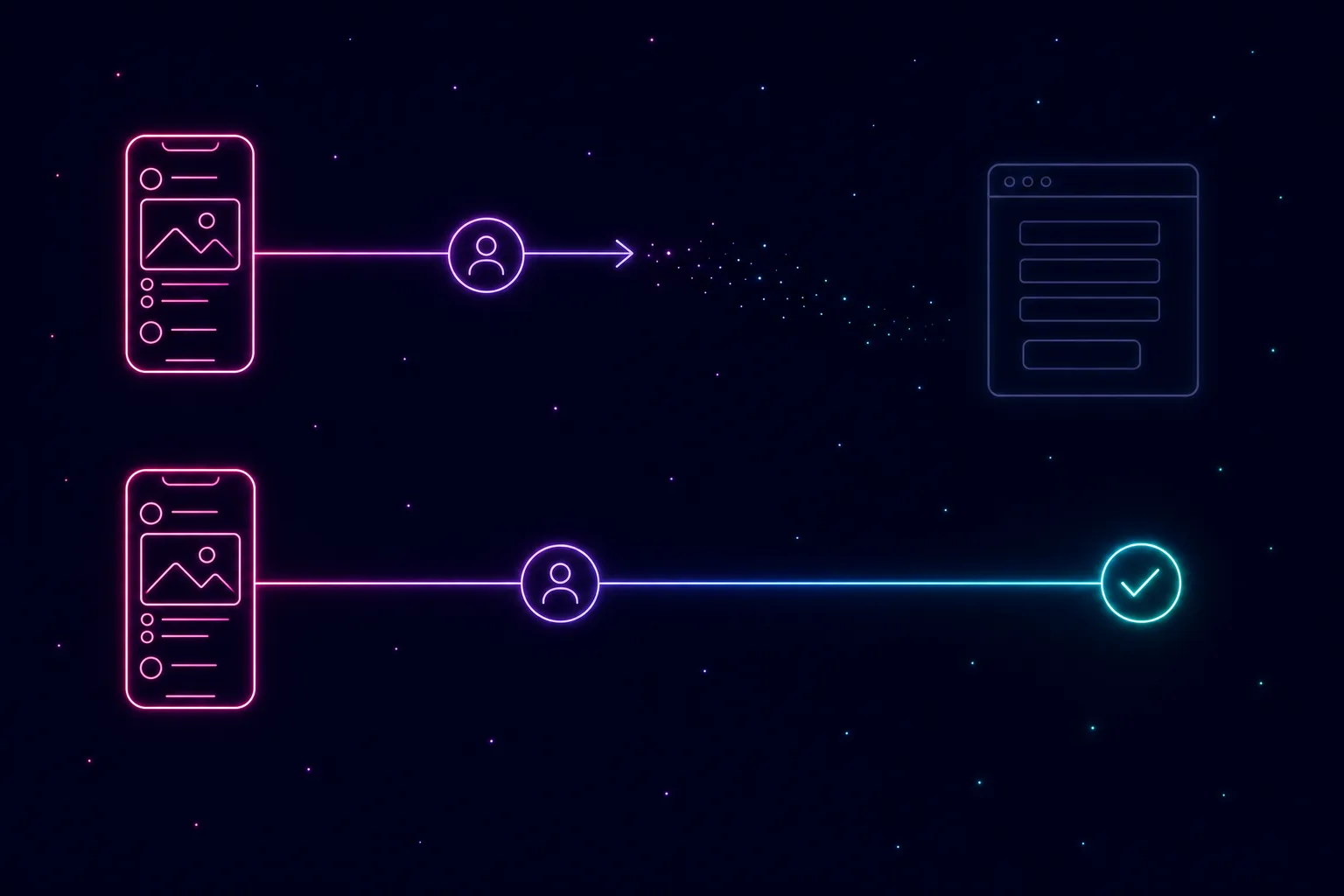
To fix application drop-off from social media job ads, identify the stage where candidates stop, inspect the journey on their devices and test a change against completed, relevant applications. Redirects can introduce friction, but so can slow pages, unclear job requirements, lengthy forms and technical errors. The correct fix follows the observed problem.
Adway’s Social Apply is one option to evaluate when the application handoff is the constraint. It should be compared with improving the existing mobile application flow, using the same qualification criteria and downstream hiring measures.
Key facts
- An ad click, a loaded destination, an application start and a submitted application are different events.
- A gap between ad clicks and recorded visits can reflect tracking differences as well as abandonment.
- Do not remove job-critical questions simply to increase form completions. Judge the result alongside applicant relevance.
- A successful submission must reach the recruiting workflow and receive appropriate follow-up.
- No single industry abandonment figure establishes the cause of drop-off in your campaign.
Where are candidates actually leaving?
Map the candidate journey before changing it. Follow a live ad from the social app, through the destination and application, to the confirmation. Then check the record that reaches the ATS. Test the normal journey and at least one error case, such as a missing required field or an interrupted submission.
Use a stage table to locate the problem:
| Stage | Evidence to inspect | Possible issue to investigate |
|---|---|---|
| Ad click to destination load | Click reporting, destination requests, device tests | Slow load, broken link, tracking differences or an unexpected destination |
| Destination load to application start | Page content, start events and candidate feedback | Unclear pay, location, eligibility or role expectations |
| Application start to submission | Field errors, completion events and usability tests | Repeated questions, uploads, account creation or technical failures |
| Submission to ATS record | Successful saves, integration logs and duplicates | Sync errors or missing information |
| ATS record to recruiting contact | Review timing and contact outcomes | Slow follow-up or mismatched expectations |
These are diagnostic possibilities, not a claim that every candidate leaves for the same reason. An aggregate completion rate can point to a problem while hiding the particular stage where it occurs. Segment by device, role and destination when the sample is large enough to support the comparison.
How do you distinguish abandonment from measurement gaps?
Start by defining each event. An application start should mean the candidate began the application, not merely that a form appeared on screen. A submitted application should mean the system accepted the record, not that someone pressed a button. Repeated presses and validation errors should not create extra successful submissions.
Compare counts from adjacent stages over the same window and with compatible definitions. Social platforms and web analytics can count clicks and visits differently. Consent settings, browser restrictions and page-load failures can also affect the observed records. Investigate those differences before describing every missing visit as a lost candidate.
Where possible, reconcile accepted applications with the receiving system. A candidate can finish the visible form while a later integration fails. That is an operational problem even if the web completion event looks healthy. Keep failed syncs and duplicate records visible in the review.
Avoid drawing detailed conclusions from a small sample. If only a few candidates have started a form, qualitative testing can identify obvious friction while you gather more observations. A short test can establish that a button is broken; it cannot necessarily establish a stable conversion difference between two otherwise working journeys.
What should you fix first on the existing journey?
Fix broken links, failed submissions and inaccessible controls before testing persuasive changes. A shorter headline cannot repair a form that rejects a valid phone number. Test with the same mobile browser or in-app browser candidates are likely to use, and check that keyboard, labels and error messages work together.
Then make the role understandable before asking for an application. Candidates should be able to find the location, working pattern and essential requirements without navigating through unrelated pages. A person who discovers a disqualifying requirement late in the process may have a legitimate reason to stop.
Review every requested field. Separate information needed for an initial assessment from information that can be collected later. Remove duplicate entry where the system supports it, and make any upload requirements clear. Keep necessary qualification checks; a higher completion count is not progress if the recruiting team can no longer assess basic fit.
Finally, inspect the confirmation and follow-up. Explain what happens next and ensure the recruiting team can contact the applicant using the information received. A completed application that sits unreviewed is a different bottleneck from form abandonment, but it still prevents the campaign from producing a hiring outcome.
When is Social Apply worth evaluating?
Evaluate Social Apply when the handoff from social interest to application is a demonstrated source of friction. Adway positions it as an application experience connected to social recruitment, with candidate screening and profile information supporting the recruiting workflow. Confirm the supported experience for the channel and integration you intend to use.
Ask for a demonstration of the actual journey from an ad on a phone to the record received by your team. Check which information is collected, how a candidate sees the role requirements, what screening is performed and how exceptions are handled. Do not assume every social platform offers an identical native application experience.
The alternative can be improving the mobile career-site or ATS form you already use. That may be the right choice if the application needs detailed supporting information or the present platform can remove the main friction with a small change. Keep both options in the evaluation and compare them against the same requirement.
Adway’s Always-On Job Ads and ATS integrations are relevant to the wider workflow. Campaign automation and an easier application path solve different parts of that workflow. Neither makes job fit, accurate source capture or recruiter follow-up optional.
How do you test a change without sacrificing quality?
Define the primary measure before the test. Application completion rate uses submitted applications divided by application starts. Click-to-application rate uses submitted applications divided by a clearly specified click count. These measures answer different questions and should not be exchanged halfway through a comparison.
Also define qualified application rate using a consistent screening rubric. Keep the number awaiting review visible. If a new journey produces more completed forms but fewer relevant candidates per unit of spend, inspect the targeting, expectations and qualification questions before declaring success.
An illustrative example shows why the denominator matters. Suppose 200 people load a vacancy page, 80 start the application and 40 submit it. Completion from start is 40 divided by 80; completion from a loaded page is 40 divided by 200. Both calculations are valid when labelled. Neither establishes how many people became qualified applicants or hires. These are hypothetical counts, not an Adway benchmark.
Keep role mix, budget and assessment criteria as consistent as possible. If the job offer, market or creative changes alongside the form, record those changes and avoid attributing the whole result to the application experience. A controlled test is preferable when practical; an observational before-and-after comparison needs that limitation stated.
What happens after application completion improves?
Track interviews, offers and hires as the cohort matures. For longer-term evaluation, connect the source to the quality-of-hire workflow. Early campaign decisions need leading indicators, but they should remain distinct from employee outcomes.
For a named customer example, Ocab reported 33% more quality hires per vacancy. That result supports a discussion about hiring quality; it does not establish the cause of abandonment in your own application flow or guarantee a completion lift from a particular change.
To assess whether Adway fits, book a demonstration with the role, channel and application stage you want to improve. Ask to compare the supported Social Apply journey with your existing process and agree what evidence would justify a change.
Fix the stage where evidence shows friction, then follow the candidate beyond the submit button.
Sources
The diagnostic table and worked example are editorial guidance.
Frequently asked questions
How do you fix application drop-off from social job ads?
Identify where candidates stop, test the journey on their devices and fix the observed problem. Compare changes using completed and relevant applications. Redirects, long forms, unclear requirements and technical errors are possible causes.
Are redirects always the main cause?
No. A redirect can add friction, but the cause must be established from the actual journey. Role expectations, form design, tracking differences and submission failures also need investigation.
When should Social Apply be evaluated?
Evaluate Social Apply when the application handoff is a demonstrated constraint. Confirm the supported channel experience and ATS workflow, and compare it with improvements to the existing mobile application path.
What should a successful test measure?
Define completion rate and its denominator before testing. Track qualified applications and pending reviews alongside completions, then follow interviews and hires as the cohort matures.
Related reading
-
How to Build a Talent Pool From Social Media
-
Social Advertising vs Sourcing Databases: Two Ways to Reach Passive Talent on LinkedIn and Social Media
-
Best Alternatives to LinkedIn for Recruiting on Social Media
-
How to Attract Quality Candidates on Social Media
Want to see this in practice?