
How to Reach Passive Candidates on Facebook, Instagram and TikTok
A practical guide to reaching passive candidates on Facebook, Instagram and TikTok in 2026: what each channel is best at, how in-feed employer-brand job ads work, and how to turn scroll into applications synced to your ATS.
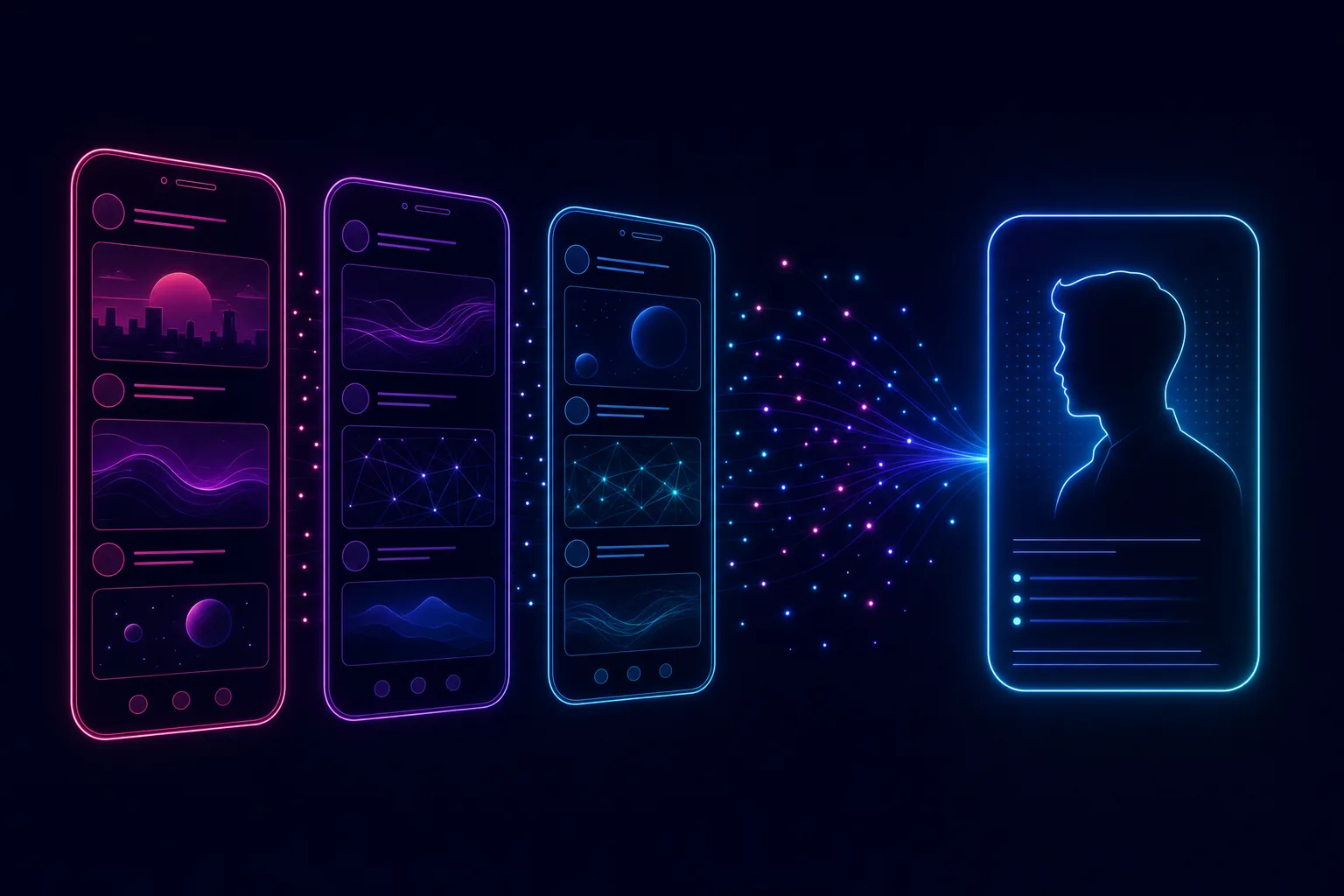
Reaching passive candidates on Facebook, Instagram and TikTok means advertising to them the way a consumer brand advertises to shoppers who were not shopping: with targeted, paid employer-brand content in the feed, aimed by interest, role and location rather than by job-search intent. Passive candidates are not searching job boards, so keyword sourcing never finds them. What does find them is an always-on stream of branded job ads that meet them mid-scroll and let them apply in one click, with the application synced straight into your ATS. Adway is the social-first platform built around exactly that mechanism.
This guide covers what each of the three channels is genuinely best at, how the in-feed apply flow works, and how to measure it.
Key facts
- Roughly 70% of the global workforce is passive talent: not applying, but reachable in the social feed.
- There are now 5.79 billion social media identities worldwide, and the average user spends about two and a half hours a day in social and video feeds. That is where the passive majority spends its attention.
- Facebook, Instagram and TikTok are complementary, not interchangeable: Facebook for reach and precision targeting, Instagram for visual employer-brand storytelling, TikTok for young and hard-to-reach talent.
- The mechanism that converts passive attention into applications is an in-feed, one-click apply flow synced to the ATS, not a link out to a career site.
- Adway publishes employer-brand job ads across 8+ social platforms in 54 countries and has been recognised as a Fosway 9-Grid Core Leader in Talent Acquisition for 5 consecutive years.
Why passive candidates need a social-first approach
The people you most want to hire are usually the people not looking. They have jobs, they are good at them, and they are not refreshing job boards. But they are on their phones, and they scroll the same feeds as everyone else. If your reach depends on someone deciding to search, you have already excluded the majority.
Passive sourcing on social flips the model. Instead of waiting for intent, you build presence. You run employer-brand content continuously, target it by the interests, behaviours and locations of the people who fit your roles, and let the platform put you in front of them at the moment they are receptive. This is the difference between fishing where the fish are actively biting and being visible in the water all day long. For the strategy behind always-on presence, see the social media recruiting guide.
How do Facebook, Instagram and TikTok compare for passive sourcing?
| Channel | Audience skew | Best for | Passive-sourcing strength |
|---|---|---|---|
| Broad, strong among 25-44 | Regional, frontline and high-volume hiring | Widest reach plus the most precise location and interest targeting | |
| Younger, visual, 18-34 heavy | Professional and early-career employer branding | Storytelling in Reels and Stories that builds brand affinity over time | |
| TikTok | Young, 18-34 dominant | Emerging talent and hard-to-reach segments | Highest dwell time and organic-feeling video that reaches non-searchers |
Meta runs Facebook and Instagram through one advertising system, so in practice you plan them together and let placements optimise across both. TikTok sits apart, with its own creative language. The winning setup treats all three as one always-on presence rather than three separate campaigns.
Reaching passive candidates on Facebook
Facebook remains the widest net in recruitment advertising. Meta’s advertising tools reported an ad audience of roughly 2.28 billion adults aged 18 and above, with the single largest segment being people aged 25 to 34. That reach, combined with the deepest interest and location targeting of the three, is why Facebook is the workhorse for regional, frontline and volume hiring.
The channel is also where precise targeting pays off. Because Facebook lets you define audiences by location radius, interests and behaviour, you can put a nurse role in front of healthcare-adjacent audiences in a specific region, or a construction role in front of the exact catchment where the site sits. Adway used this precision to help PEAB run targeted construction campaigns in which 86 to 95 percent of applications came from women, a result manual job-board posting could never engineer. Reach without targeting is noise: Facebook gives you both.
Reaching passive candidates on Instagram
Instagram is where employer brand becomes visual. About 34% of Instagram’s global audience is aged 25 to 34, with a further 27.6% aged 18 to 24, so it over-indexes on the professional and early-career talent many teams are chasing. Because it shares Meta’s ad system with Facebook, every campaign you build can extend to Instagram placements without separate setup.
The register is different, though. Instagram rewards Reels and Stories that show what it actually feels like to work somewhere: the team, the day-to-day, the values in action, not a job description on a coloured background. Passive candidates rarely convert on the first impression here; they build familiarity across several, and warm to a role once the brand feels known. That is why an always-on presence beats a burst campaign. Consistent, native-feeling content is how a passive scroller becomes someone who taps apply.
Reaching passive candidates on TikTok
TikTok is the strongest channel for talent that other methods miss entirely. 65% of TikTok users are aged 18 to 34, and the app draws the highest average daily time of any major social network, around 55 minutes per user. Those are people who almost never touch a job board, which is precisely why they are worth reaching.
The catch is that TikTok punishes anything that looks like a corporate ad. Content has to feel native: quick, human, honest, made for the platform rather than repurposed from a brochure. Done well, an employer-brand clip that reads as a real person talking about a real job can reach a passive audience at a scale and cost that traditional channels cannot match. TikTok is not the place to post a requisition; it is the place to make a brand feel worth working for.
How does the in-feed apply flow actually work?
Reach is only half the job. The reason most social recruiting underperforms is the hand-off: an ad on the feed sends the candidate to a career site, a login and a fifteen-field form, and the passive candidate, who was never that motivated to begin with, drops out. Every extra step leaks the very people you paid to reach.
The mechanism that closes the loop is an in-feed application. The candidate taps the ad and applies inside the platform, on mobile, with the details the platform already holds pre-filled, and the application passes straight into the ATS. No detour, no account creation, no lost momentum. This is the core of Adway’s approach: one-click in-feed applications synced to 30+ ATS and CRM systems, so socially-sourced candidates land in your system of record exactly like any other applicant. Independent benchmarking of this model shows a 54% reduction in cost-per-application versus traditional channels.
How do you turn a one-off reach into a compounding pipeline?
The mistake teams make is treating each role as a fresh media buy. Every campaign you run builds an audience of people who engaged with your brand, and if that audience evaporates when the campaign ends, you pay to rebuild it next time. The alternative is to keep it.
Adway’s Social Talent Pools capture the people who engage with your employer-brand ads and nurture them over time, so the next role launches into a warm audience rather than a cold buy. This is how presence compounds: OnePartnerGroup scaled social recruiting from 7% to 100% of its roles across 24 regions, reaching a 23x return, precisely because each campaign fed the next rather than starting from zero. Volume alone is not the goal; a growing, owned audience of relevant, quality candidates is.
Where to start
Pick the channel that matches your roles, but plan for all three. Run Facebook for reach and targeting, Instagram for brand affinity, TikTok for the talent nobody else can find, and wire every ad to an in-feed apply flow that reaches your ATS. Keep it always-on so presence compounds, and measure cost-per-quality-application by channel rather than raw impressions.
The best candidates may not be looking, but that doesn’t mean they’re not listening.
Sources
Frequently asked questions
How do you reach passive candidates on Facebook, Instagram and TikTok?
You reach them the way consumer brands reach shoppers who were not shopping: with paid, targeted employer-brand content in the feed, aimed by interest, role and location rather than by job-search intent. Passive candidates are not typing queries into job boards, so keyword-based sourcing never finds them. Instead you run always-on employer-brand job ads across Facebook, Instagram and TikTok, let people apply in one click inside the feed, and sync those applications straight into your ATS. Adway automates this: every open role becomes a branded ad published across social channels, with in-feed applications flowing into 30+ ATS and CRM systems.
Which social platform is best for reaching passive candidates?
It depends on the role and the audience. Facebook offers the widest reach and the strongest location and interest targeting, which makes it the workhorse for regional, frontline and high-volume hiring. Instagram skews younger and more visual, so it suits employer-brand storytelling for professional and early-career roles. TikTok has the highest average dwell time of any major network and a young, culture-forward audience, which makes it strong for emerging talent and hard-to-reach segments. The point is not to choose one: passive candidates move between all three, so the reach has to follow them.
Do passive candidates actually apply to jobs on social media?
Yes, when the friction is removed. Passive candidates will not leave the feed to hunt for a career site, fill in a long form and create an account. They will tap an ad that speaks to them and apply in one click if the application happens inside the platform. The mechanism that works is an in-feed, mobile-first apply flow that pre-fills what the platform already knows and passes the application to the ATS. Roughly 70% of the workforce is passive at any moment, and this is how you convert a share of them without waiting for them to start searching.
How is reaching passive candidates on social different from sourcing on LinkedIn?
LinkedIn sourcing is largely outbound and one-to-one: recruiters search profiles and send InMails to people who match a title. It reaches candidates who keep their profiles current and are open to messages, which is a fraction of the market. Social employer-brand advertising on Facebook, Instagram and TikTok is inbound and one-to-many: you put targeted content in front of the other 70% who scroll social but never update a professional profile, and you let them raise their hand. The two are additive, and the social layer reaches the majority that outbound sourcing cannot.
How do you measure passive candidate sourcing on social platforms?
Measure the whole funnel, not vanity reach. Track cost-per-application and cost-per-quality-application by channel, application completion rate in the feed, the growth of your owned talent audience, and downstream quality-of-hire once candidates enter the ATS. Reach and impressions matter only as leading indicators of pipeline. Adway reports performance across every channel in one place and feeds applications into the ATS so quality can be traced back to the source channel.
Related reading
-
How to Reach Passive Candidates on X (Twitter) for Recruiting in 2026
-
The Best Way to Source Passive Candidates on LinkedIn in 2026
-
Social Advertising vs Sourcing Databases: Two Ways to Reach Passive Talent on LinkedIn and Social Media
-
How to Attract Quality Candidates on Social Media
Want to see this in practice?